Learning About Asexuality - Don't Hate. Educate.
Asexuality is more complicated than you might think.

In a world of people who don’t think before they speak, be the person who puts a smile on someone’s face.
Hatred often stems from a lack of understanding. The unknown makes us defensive, and to an extent, we put some walls up because anything “different” makes us uncomfortable.
But isn’t “normal” subjective?
Being different isn’t harmful. Besides, what is “different” to somebody can be another person’s “norm.”
In this case, asexuality is my norm. And so is being “queer” to many other people in the LGBT+ community.
But you know what else is so normal to me that other people say is really bizarre?
Being a TWIN.
Oh, but you wouldn’t dare tell me that I’m inhuman for being a twin, right? You wouldn’t tell me that I’m any less of a human being because I shared a womb with my sister? Even though it’s different?
The same idea applies to asexuality. My life experiences shouldn’t impact how you treat me, especially when I’ve done nothing to hurt you. My romantic/sexual orientations do no harm to other people. So, why should anyone care?
Unfortunately, some people do care. Such as the guy who says that “refusing to reproduce is a mental illness” (specifically targeting homosexuality and asexuality).
So...I guess that includes all the straight people who use birth control, right?
I’ve had other people make “plant” jokes to me. Another person even asked why the protagonist of my book is going through mitosis (what a colorful and confusing question).
And despite being questions, they come off as hateful. These people are choosing to hate instead of educating themselves, and personally, I find that to be a rather unfulfilling way to live and interact with others.
Maybe instead of asking Grok to explain why asexuality is a mental illness, you should open your ears and ask an asexual person about their experiences. Trust me, we don’t bite. We can talk about sex, and feelings, and whatever else you have to ask about. It’s not awkward, especially when most asexuals want people to understand and accept us for who we are.
I knew that I was asexual back when I was fifteen. I have over a decade of self-discovery under my belt, and I am happy to teach people what it’s like to be ace. And to my fellow aces, I want you to feel comfortable with yourselves.
“What’s it like being asexual?”
It’s the same kind of living as everyone else. Just without the sex.
Actually, I wrote a book. Completely fictional, of course. It’s about vigilantes in a futuristic bayside city. And the protagonist is asexual.
He’s trying to get by in life just like everyone else. He’s still deeply human, and has a lot of complicated feelings. But he’s asexual, yet he doesn’t let that define him. It’s just a part of who he is, and it doesn’t mean he’s broken. It doesn’t mean he’s useless (as some acephobic people might say). It doesn’t mean he can’t be loved.
He’s a hero. And his actions speak louder than any label.
If you’re curious about reading a story through the eyes of someone who is asexual, then give Fire in Flight a chance.
Here’s a recent review that covers the asexual representation:
“Extra bonus points for the writing of romance and asexual representation: Matt's aceness does not feel forced or weird and I actually related with him so much it hurt. The romance was also very naturally written and convincing, which I often don't see in literature, especially with mxf couples!”
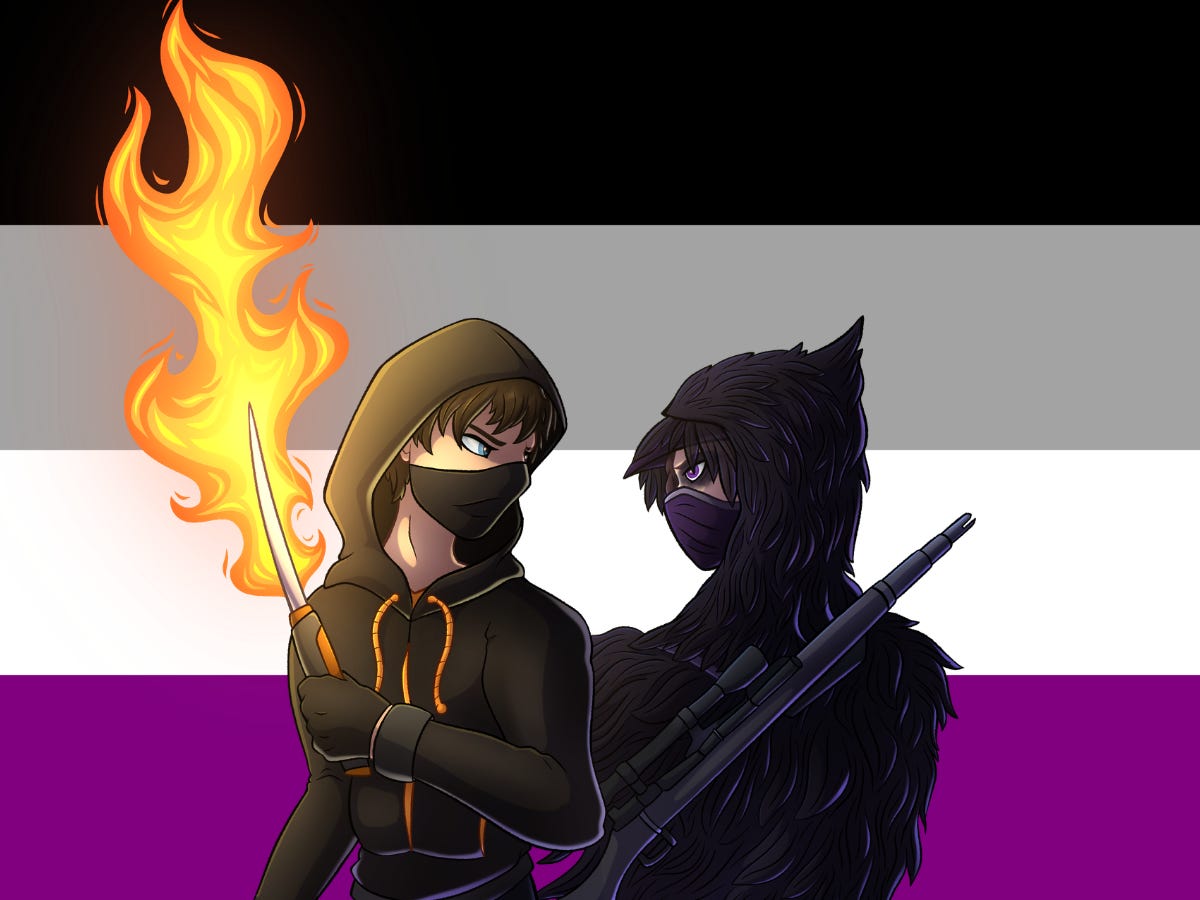
So, as someone on the spectrum, I prefer to educate people first instead of jumping to attack them. But with that being said, I hope the ones who don’t quite understand asexuality would do the same. Talk to someone, and learn about it.
“Norms” come in all shapes and sizes. And so do people. The only way we’ll ever keep growing as a society is if we can accept each other.
Thank you for reading. I’m an aroace author with one book published and two more on the way this year. I mostly enjoy writing about my books and asexuality on Substack, and if you’re interested in learning more, then please subscribe!
Thank you for writing ✍️
I think its so important to hear perspectives from everyone in the community.
As a basically hypersexual bi stereotype this is the very opposite of my experience.
But, I can absolutely understand and emphasise with your desire to be heard and seen.
The put downs and dismissive comments I have had are different "Oh you are actually just gay." (From gay men for example). But the root of the issue is the same, a lack of empathy and understanding that people are different sometimes in ways that we struggle to understand.
This certainly helped broaden my understanding 🙏